Jungle Huts
Sleep Where the Wild Things Are
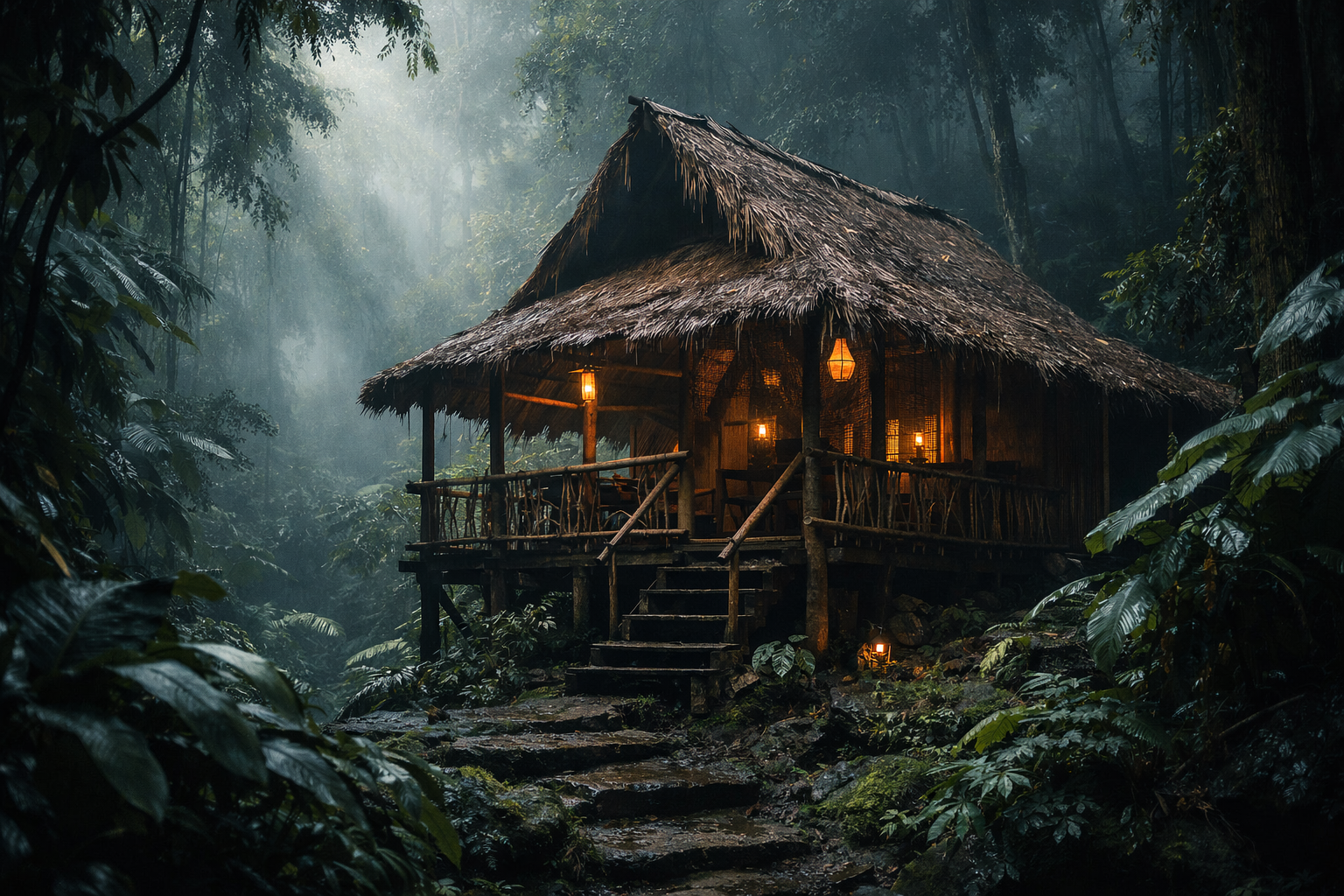
A jungle hut strips away everything unnecessary and leaves you with what matters: the forest, the sky, and the primal satisfaction of sleeping where wild animals roam. These are not survival exercises. They are thoughtfully designed eco-shelters built from local materials -- bamboo, mud, thatch, and stone -- that belong to the landscape as naturally as the trees around them. Our jungle huts sit at the edges of national parks and wildlife reserves across India. At Bandipur, elephants cross the clearing at dawn while you sip your coffee on the verandah. At Kabini, leopards have been spotted from the camp's viewing platform after dark. At Satpura, the forest is so dense and so quiet that you can hear a leaf hit the ground from twenty meters away. The architecture respects the environment. Walls are porous to let the forest in -- the sounds, the smells, the temperature shifts that mark the passage from day to night. Roofs are thatched to keep rain out while blending into the canopy. Furniture is minimal, built from fallen wood. The luxury here is not in thread count but in the quality of silence and the proximity to something genuinely wild. Meals are communal affairs around a central fire pit, where guides share stories of tracking tigers and guests compare the day's sightings. The food is simple, local, and cooked over wood fire -- the kind of meal that tastes better than it has any right to because fresh air and physical activity are the best seasonings ever invented.
What Makes It Special
Wildlife sightings from your verandah -- elephants, deer, wild boar, and occasionally predators in their natural habitat
Eco-built structures using local materials that blend seamlessly into the forest landscape
Guided jungle walks with trained naturalists who read the forest like a book
Communal campfire dinners with fellow travelers, sharing stories under an unpolluted sky
Dawn and dusk safari drives into adjacent national parks with expert trackers
Complete immersion in nature -- the sounds, smells, and rhythms of the forest become your world
Amenities
Perfect For
Unique Experiences
Dawn Safari Drive
Leave before the sun rises, when the forest is cold and misty and predators are still active. A trained tracker drives while a naturalist spots fresh pugmarks, alarm calls, and movement in the undergrowth. This is wildlife viewing at its most raw.
Night Sounds Walk
After dinner, step into the darkness with a guide who navigates by sound. Learn to identify owl species by their calls, locate frogs by their songs, and understand the complex nocturnal orchestra that most people sleep through.
Tracking Workshop
Spend a morning with the camp naturalist learning to read the forest floor. Identify animal tracks in soft mud, decode scratch marks on trees, and understand territorial markings. You will never walk through a forest the same way again.
Campfire Astronomy
Far from city lights, the jungle sky is a planetarium. After dinner, a guide maps constellations, traces the Milky Way, and shares local folklore about the stars that guided hunters and travelers for millennia.
Where to Experience Jungle Huts
Available across 10+ stunning locations
Bandipur
Kabini
Satpura
Pench
Ranthambore
Jim Corbett
Kaziranga
Periyar
Wayanad
Dandeli
Things to Know
Jungle huts are eco-accommodations. Expect limited electricity (often solar), intermittent hot water, and no air conditioning.
Wildlife sightings are never guaranteed. Patience and early mornings dramatically improve your chances.
National park safaris require advance permits. Book at least 30-60 days ahead, especially for tiger reserves.
Pack neutral-colored clothing for safaris. Avoid bright colors, perfumes, and noisy fabrics.
Most jungle camps have strict quiet hours after 9 PM. Sound carries in the forest, and noise disturbs wildlife.
Carry prescribed medications. Jungle camps are typically far from pharmacies and hospitals.
Ready for This Unique Experience?
Let us find the perfect jungle huts for your next adventure